Sold in Ohio, Owning Outright in Şanlıurfa: How Middle-Class Americans Are Escaping the Housing Trap
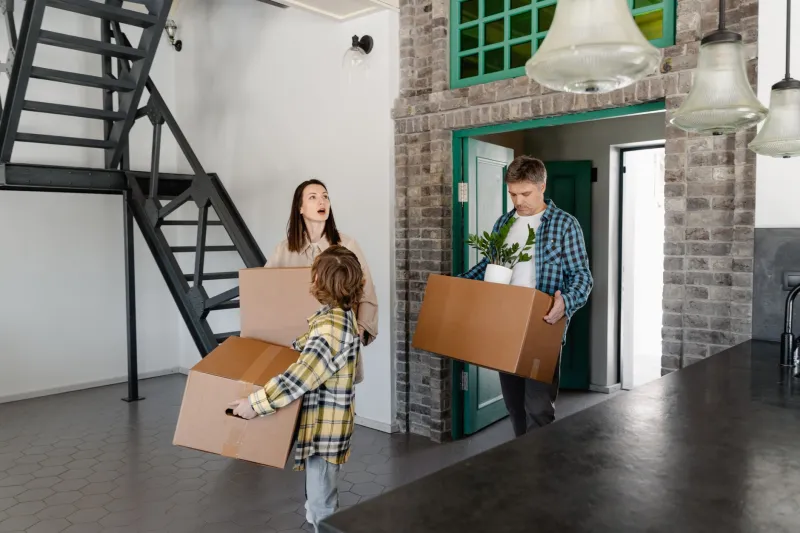
For decades, homeownership was the cornerstone of American middle-class identity. You bought a house, you built equity, and eventually that equity translated into security. Today, for a significant portion of US homeowners, that promise has curdled. Home values in many markets have risen so dramatically that the equity locked inside a modest property cannot purchase anything comparable nearby — and yet it sits there, enormous on paper, inaccessible in practice.
A small but rapidly growing cohort of Americans has found an unconventional solution. They are selling their US properties, wiring the proceeds internationally, and purchasing premium real estate in Şanlıurfa, Turkey — outright, with no mortgage, and frequently with capital remaining. What begins as a financial calculation often ends as something more profound: a complete psychological reckoning with what ownership, security, and freedom actually mean.
The Equity Trap No One Talks About
Consider the arithmetic that is quietly suffocating millions of American households. A homeowner in Columbus, Ohio, or Fresno, California, or Memphis, Tennessee may be sitting on $180,000 to $280,000 in home equity after years of diligent mortgage payments. On paper, that figure looks like wealth. In practice, it purchases almost nothing within the same metropolitan area. A lateral move — same square footage, same school district, same commute — would require that owner to take on a new mortgage at interest rates that have more than doubled since 2021, resulting in monthly payments that dwarf what they currently owe.
Downsizing locally offers modest relief but rarely liberation. Moving to a lower cost-of-living state means uprooting careers, families, and social networks. And even the so-called affordable American markets — Tulsa, Knoxville, Boise — have seen price appreciation that erodes the advantage. The equity trap is not regional. It is national.
This is the context in which Şanlıurfa enters the conversation.
What $180,000 Purchases in Şanlıurfa
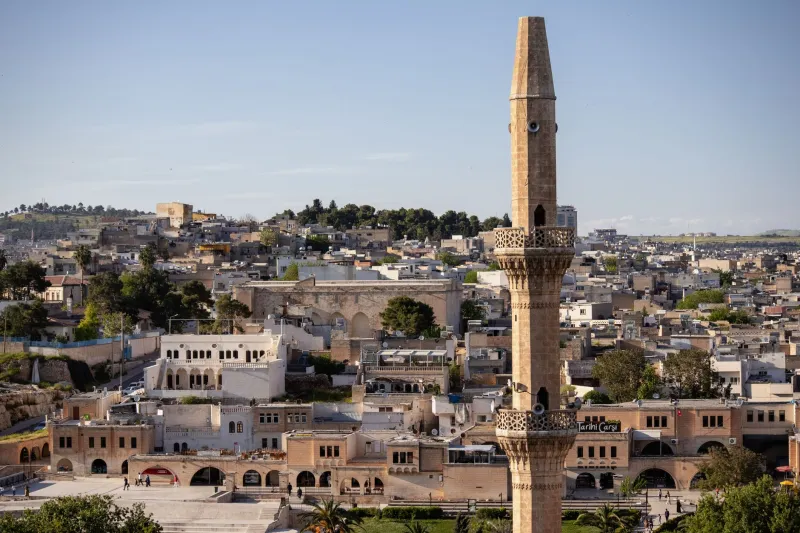
Şanlıurfa's property market operates in an entirely different register from the US housing landscape. The city, located in southeastern Turkey and recognized internationally for its extraordinary archaeological heritage and rapid urban development, offers a spectrum of residential properties that would be inconceivable at equivalent price points in any American city.
At the $150,000 to $200,000 range — the approximate net proceeds from selling a median-priced home in many secondary US markets — a buyer in Şanlıurfa can acquire a fully finished, contemporary apartment in a modern residential complex with amenities including covered parking, landscaped grounds, and 24-hour security. At the upper end of that budget, spacious villas and traditional stone houses in sought-after neighborhoods become accessible. These are not starter properties or compromise purchases. They are, by any objective measure, premium homes.
The purchase is made outright. There is no mortgage. There is no monthly payment. There is no bank involved in the ongoing relationship between owner and property.
Three Families, Three Reckonings
The Hendersons, formerly of Dayton: After 22 years in a four-bedroom colonial they purchased for $112,000, the Hendersons found themselves with $210,000 in equity and a retirement timeline that felt increasingly unrealistic given US living costs. They sold, purchased a 185-square-meter apartment in a new development in Şanlıurfa's Karaköprü district for the equivalent of $138,000, and retained $72,000 in liquid savings. Their monthly expenses dropped from approximately $4,200 to under $1,100. Mr. Henderson describes the transition as "the first time in thirty years I felt like the money was working for me instead of the other way around."
Diane Calloway, formerly of Stockton, California: A single homeowner in her late fifties, Diane had watched her modest ranch house appreciate to a market value that surprised even her. After selling and navigating capital gains considerations with a cross-border tax advisor, she cleared $195,000. Her Şanlıurfa property — a renovated traditional stone home near the historic bazaar district — cost $160,000. She now lives debt-free in a home she describes as "genuinely beautiful in a way my Stockton house never was," with funds remaining for travel and emergencies.
The Morales family, formerly of El Paso: With three school-age children and a remote work arrangement that untethered them geographically, the Morales family made what they call a "purely logical" decision. Their El Paso home sold for $245,000. They purchased a large family villa on Şanlıurfa's developing eastern edge for $178,000 and enrolled their children in one of the city's well-regarded private schools at a fraction of US private school tuition. The remaining capital sits in savings, generating interest. "We kept waiting for the catch," says Mrs. Morales. "There wasn't one."
The Psychological Dimension
Financial advisors who work with expat buyers consistently note that the transformation these families describe is not purely numerical. There is a psychological component to debt-free ownership that American homeowners — conditioned to view a 30-year mortgage as the normal cost of shelter — are often unprepared for.
Owning a home without a lender's claim on it alters the relationship between a person and their labor. When no monthly payment must be met, professional decisions are no longer made from a position of financial compulsion. Careers can be reconsidered. Working hours can be reduced. Entrepreneurial risks become more manageable. The capital that once serviced debt can be redirected toward investment, leisure, or simply held as genuine security rather than paper equity.
This shift in psychological orientation is, according to those who have made the transition, as significant as the financial improvement itself.
Navigating the Process Responsibly
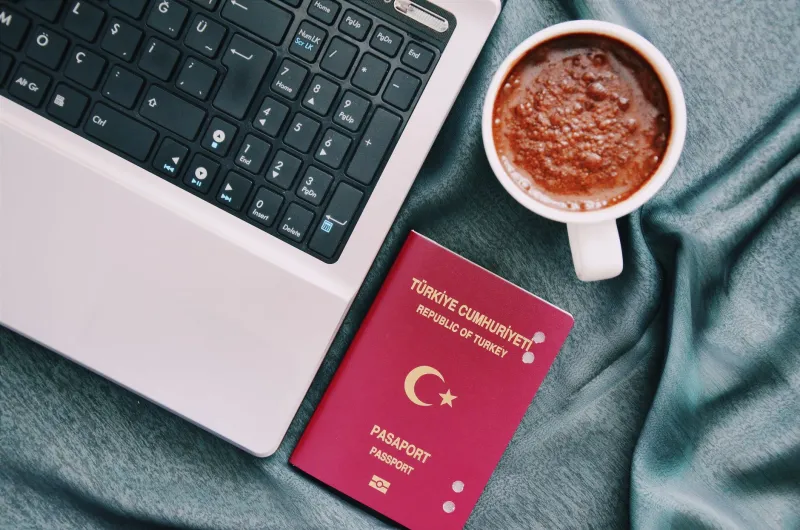
A transaction of this magnitude requires careful preparation. American buyers should engage a licensed Turkish real estate attorney before committing to any purchase. Title deed verification, foreign ownership eligibility confirmation, and a thorough review of the tapu (property deed) process are non-negotiable steps. Tax implications on both sides of the transaction — including US capital gains on the sale of a primary residence and any applicable Turkish property transfer taxes — should be reviewed with a qualified cross-border tax professional.
Currency timing also warrants attention. The exchange rate between the US dollar and the Turkish lira has historically favored dollar-holding buyers, though fluctuations occur. Buyers who work with international currency specialists rather than standard bank wire services frequently capture more favorable conversion rates.
Şanlıurfa Satılık maintains relationships with vetted legal and financial professionals who specialize in guiding US buyers through each stage of the acquisition process.
A Different Kind of American Dream
The conventional American Dream prescribed a specific geography: buy here, stay here, build equity here, retire here. For a growing number of middle-class Americans, that script has become financially incoherent. The equity they have accumulated is real, but its purchasing power within the US system is severely constrained.
Şanlıurfa represents, for these buyers, not a retreat from ambition but a reorientation of it. The dream of outright ownership — a home that belongs to you without qualification, without monthly tribute to a lender, without the anxiety of rate resets or refinancing cycles — turns out to be achievable. It simply requires looking somewhere unexpected.
For those willing to look, Şanlıurfa is ready to be found.