Countdown to the Boom: Why Şanlıurfa's 18-Month Window Is the Most Precise Entry Point in Emerging Market Real Estate
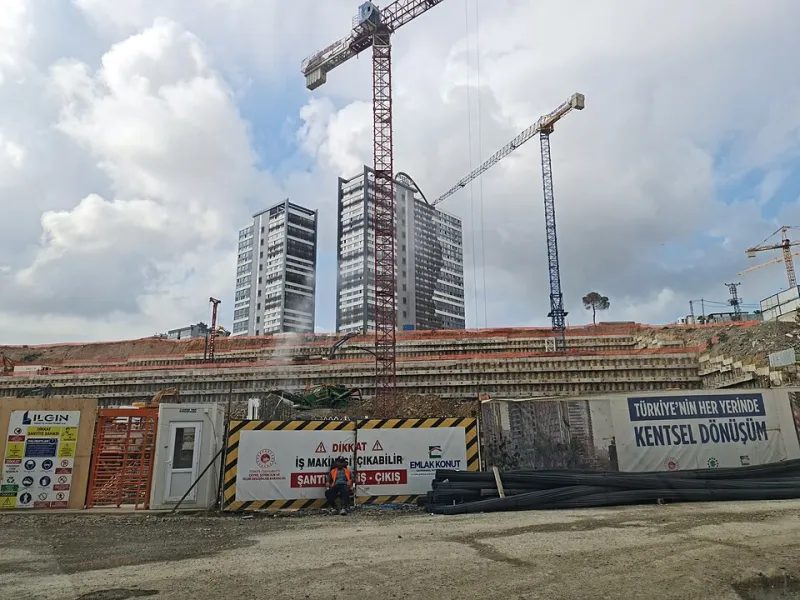
Photo: Sakaerka, CC BY 4.0, via Wikimedia Commons
In most emerging markets, investors are told to act with urgency but given little more than vague optimism to justify the rush. Şanlıurfa is different. The city's growth trajectory is not driven by speculation or sentiment alone—it is anchored to a series of concrete infrastructure milestones, government-mandated development programs, and demographic realities that produce something rare in real estate: a calculable deadline.
For American buyers accustomed to the drawn-out, cyclical rhythms of US property markets, the precision of Şanlıurfa's current moment may feel unfamiliar. It should not be mistaken for hype. The numbers, the project timelines, and the policy framework all point toward the same conclusion: the pre-boom pricing window extends approximately 18 months from today—and not significantly beyond.
What Is Actually Being Built, and When Will It Finish?
The Turkish government's investment in southeastern Anatolia is not rhetorical. The GAP (Southeastern Anatolia Project) regional development initiative has funneled billions of lira into Şanlıurfa's transportation, irrigation, and urban renewal infrastructure. Several flagship components of this initiative are approaching completion phases that historically trigger sharp property revaluations.
The Şanlıurfa-Gaziantep highway expansion, for instance, is projected to reduce travel time between the two cities to under 45 minutes upon completion—a shift that effectively extends Gaziantep's commercial gravity into Şanlıurfa's residential districts. Projects of this type, when completed in comparable Turkish cities, have historically produced 20 to 35 percent property value increases in adjacent neighborhoods within 24 months of ribbon-cutting.
Separately, the expansion of Şanlıurfa GAP Airport is nearing a phase that will accommodate significantly increased international capacity. Analysts who track Turkish regional aviation note that airport capacity upgrades in secondary cities tend to precede tourism-linked property demand surges by 12 to 18 months. The timing aligns precisely with the window under discussion.
The Demographic Pressure Building Beneath the Surface
Beyond bricks and asphalt, Şanlıurfa's population dynamics are generating organic demand pressure that no government program needs to manufacture. The city is one of Turkey's youngest by median age, with a population that has grown faster than its housing stock for several consecutive years. That gap between household formation rates and available inventory is not closing quickly—and it is pushing rental yields upward even before infrastructure improvements are priced in.
For American investors evaluating yield-versus-appreciation trade-offs, this is a meaningful signal. Markets where demographic demand is structurally outpacing supply tend to reward early entry disproportionately. Investors who arrive after infrastructure completions are announced publicly typically pay a premium that absorbs much of the yield advantage they were hoping to capture.
The Urban Renewal Multiplier
Turkey's urban renewal legislation, which empowers municipalities to redevelop structurally aged housing stock, is being applied with particular intensity in Şanlıurfa. Entire city blocks in districts such as Karaköprü and Haliliye are being cleared and rebuilt under modern zoning standards. Properties adjacent to renewal zones—but not inside them—tend to appreciate sharply as surrounding infrastructure improves without the displacement risk that affects renewal-zone properties themselves.
Savvy investors are currently identifying these buffer-zone properties, which remain priced at pre-renewal levels while sitting directly in the path of neighborhood transformation. That pricing anomaly has a shelf life. Once municipal project maps become publicly accessible and construction cranes become visible, the arbitrage disappears.
What Happens to Prices After the Window Closes?
To understand what post-boom Şanlıurfa pricing might look like, it is instructive to examine what happened in Gaziantep between 2015 and 2020, when similar infrastructure convergence occurred. Entry-level residential properties in that city's emerging districts appreciated between 60 and 90 percent in lira terms over that five-year span—a period during which the lira itself weakened, meaning dollar-denominated returns were more modest but still compelling.
Şanlıurfa enters its own inflection period from a lower base price point than Gaziantep did, with a larger infrastructure investment pipeline behind it. Conservative modeling by regional real estate analysts suggests that dollar-denominated appreciation of 40 to 60 percent is achievable for well-positioned properties acquired before the major project completions register in the market.
The 18-Month Map: Key Dates American Investors Should Track
Several specific milestones define the outer boundary of the current entry window:
- Q3 of the current year: Completion of the first phase of Şanlıurfa's new organized industrial zone, expected to bring 15,000 to 20,000 employment positions to the city's periphery and generate immediate residential demand pressure in adjacent districts.
- Late this year to early next year: Finalization of the airport expansion tender and commencement of construction, which will trigger speculative pricing in tourism-adjacent neighborhoods.
- 12 to 14 months out: Scheduled opening of multiple international school campuses under the Ministry of National Education's regional expansion program, which historically correlates with sharp appreciation in family-oriented residential districts.
- 18 months out: Projected completion of the highway upgrade connecting Şanlıurfa to the broader southeastern logistics corridor—the single event most likely to recalibrate the city's price floor permanently upward.
Entering the Market Before the Narrative Changes
Real estate markets move on narrative as much as on fundamentals. Right now, Şanlıurfa's story is known primarily to regional specialists, Turkish institutional investors, and a small but growing cohort of internationally minded American buyers. Once the infrastructure completions generate press coverage, that narrative will shift—and so will pricing.
The practical implication for American buyers is straightforward: due diligence, legal preparation, and capital positioning should begin now, not after the first headline confirms what the data already shows. At Şanlıurfa Satılık, we work with buyers at every stage of the process, from initial market orientation through deed transfer. The clock is running, but the window remains open.