One House Sold, Three Acquired: The Financial Arithmetic Driving Americans Toward Multi-Property Ownership in Şanlıurfa
There is a particular kind of financial clarity that arrives when you run the numbers side by side. On one column: a three-bedroom home in Columbus, Ohio, purchased in 2018 for $210,000, currently valued at $340,000 after years of mortgage payments and market appreciation. On the other: three distinct properties in Şanlıurfa—a furnished apartment in the city center, a two-story rental unit in a growing residential district, and a plot of land in a development corridor—acquired collectively for the equivalent of $290,000.
That is not a hypothetical constructed for rhetorical effect. It is a scenario that is playing out with increasing frequency among American homeowners who have accumulated equity in domestic real estate and are asking, with genuine seriousness, whether that equity is working as hard as it could be.
The Equity Extraction Starting Point
American homeowners who purchased before 2020 are sitting on a historically unusual amount of untapped equity. The pandemic-era appreciation surge—driven by low rates, remote work migration, and constrained inventory—added tens of thousands of dollars in paper wealth to properties across the Midwest, South, and Mountain West. For many owners, that equity has remained largely inaccessible: too expensive to extract via cash-out refinancing at current rates, and too psychologically significant to realize through an outright sale.
But for homeowners who are willing to reconsider their attachment to the domestic market—particularly those who rent rather than own their primary residence, or who have flexibility about where they base themselves—that equity represents the seed capital for a fundamentally different approach to wealth building.
The arithmetic begins with a simple question: what can $200,000–$350,000 in net proceeds actually purchase in Şanlıurfa?
What the Dollar Buys in Şanlıurfa Today
To answer that question concretely, it helps to understand current price benchmarks in Şanlıurfa's primary residential segments.
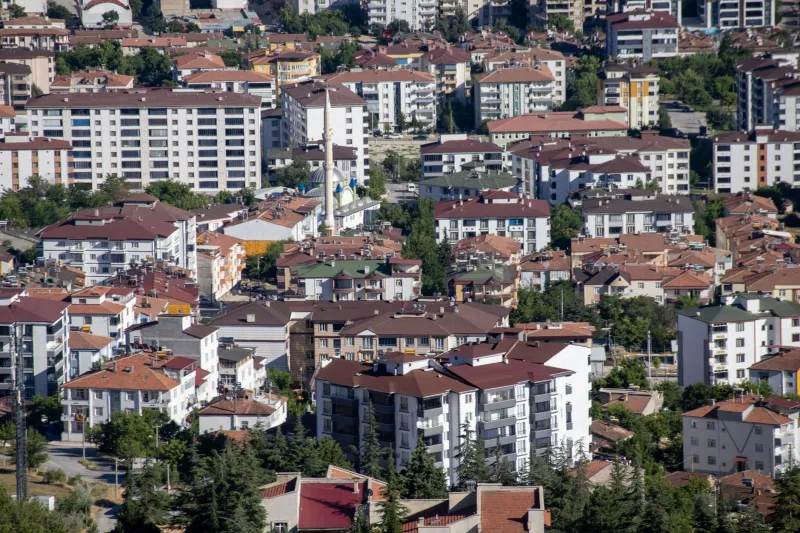
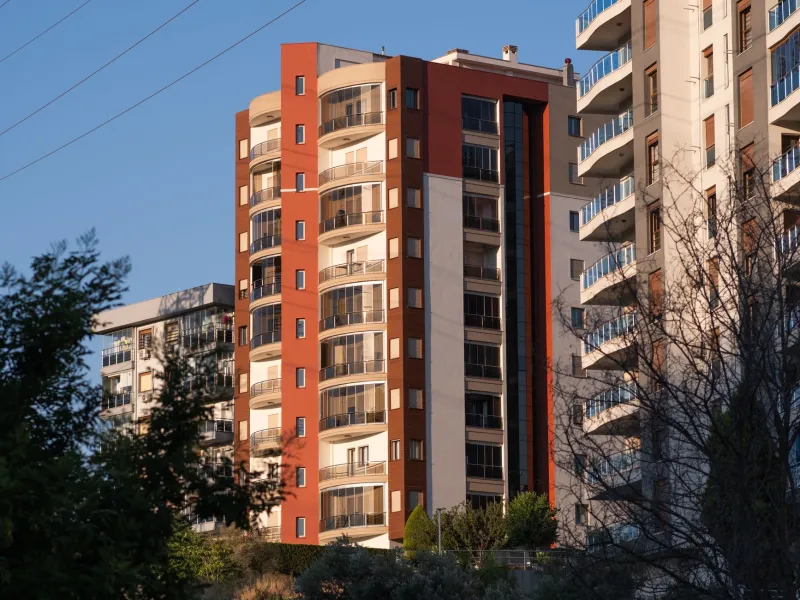
A well-appointed two-bedroom apartment in Eyyübiye or Haliliye—the city's established central districts—can currently be acquired for the equivalent of $55,000–$90,000 USD, depending on size, finish quality, and floor level. A larger family residence of 150–180 square meters in a newer development in Karaköprü or the city's expanding northern corridors typically falls in the $80,000–$130,000 range. Commercial-adjacent properties and land parcels in designated development zones are available at lower per-square-meter prices for investors with a longer horizon.
These figures mean that an American buyer arriving with $250,000 in deployable capital is not choosing between properties—they are choosing how many properties to acquire and in what configuration.
Three Archetypes of the Multi-Property Strategy
Americans who have executed this arbitrage tend to structure their acquisitions in one of three broad configurations, each reflecting a different balance between current income, capital appreciation, and personal use.
The Income-First Stack: Two rental units in high-demand residential neighborhoods plus a smaller personal-use apartment. This configuration prioritizes cash-on-cash return from day one. Rental yields in Şanlıurfa's established districts currently range from approximately 6–10% annually in lira terms, with dollar-adjusted figures varying by exchange rate movements. Investors in this category are building a current income stream while holding assets likely to appreciate.
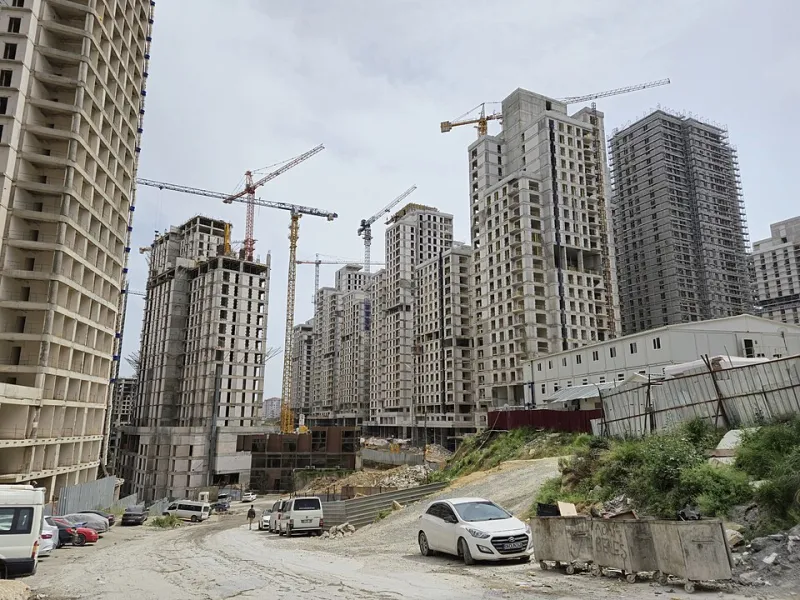
The Appreciation-Weighted Play: One comfortable primary or secondary residence plus two properties in emerging or transitional districts where land values are lower but infrastructure investment is imminent. This configuration accepts lower near-term yield in exchange for positioning in neighborhoods where appreciation is expected to outpace the city average over a five-to-ten-year horizon.
The Hybrid Portfolio: A personal-use property that doubles as a short-term rental when unoccupied, combined with one long-term residential rental and one commercial or mixed-use property. This is the most operationally complex structure but offers the broadest exposure across Şanlıurfa's different demand segments.
A Case Study in Redeployment
Consider the experience of a couple from suburban Cincinnati who sold their four-bedroom home in 2023 after their children completed college. The sale generated approximately $310,000 in net proceeds after paying off the remaining mortgage balance and transaction costs.
Rather than purchasing a smaller home in Ohio—which at current rates would have meant a monthly payment comparable to their previous mortgage despite a significantly reduced loan amount—they engaged a buyer's representative through Şanlıurfa Satılık and spent three weeks visiting properties across the city.
Their final acquisition structure: a fully renovated two-bedroom apartment in Haliliye for personal use during extended visits ($72,000); a three-bedroom unit in a newer Karaköprü building placed with a local property management firm as a long-term rental ($88,000); and a 400-square-meter plot in a designated development zone on the city's northern edge ($45,000). Total outlay: approximately $205,000, leaving a meaningful reserve for furnishing, legal fees, property management setup, and a liquidity cushion.
The rental unit is generating approximately 7,800 Turkish lira per month—a figure that, at current exchange rates, represents a modest but reliable dollar-denominated income stream. The land parcel sits in a corridor where municipal infrastructure projects are scheduled over the next three years. And the personal-use apartment, which they occupy for roughly eight weeks annually, is available for short-term rental during the remaining months.
The Leverage Question
One aspect of this strategy that differs meaningfully from domestic US real estate is the limited availability of mortgage financing for foreign buyers in Turkey. While Turkish banks do offer mortgage products to non-residents under certain conditions, the terms are generally less favorable than what American buyers are accustomed to domestically, and the application process carries additional complexity.
As a result, the multi-property strategy described here is predominantly a cash-purchase model. This is, counterintuitively, part of its appeal: by removing mortgage debt from the equation entirely, investors acquire assets without leverage risk, without interest cost drag on returns, and without exposure to refinancing cycles. In an environment where American homeowners are acutely aware of what rate volatility does to monthly obligations, the psychological value of unencumbered ownership is not trivial.
Running the Numbers Honestly
Any responsible presentation of this strategy must acknowledge its genuine complexities. Currency risk is real and cannot be dismissed. Property management from a distance requires trusted local relationships. Transaction costs in Turkey—including title deed transfer fees, appraisal requirements, and notary charges—add to the effective acquisition price and should be modeled in advance.
But for American homeowners who have already decided that their equity deserves a more dynamic deployment than a domestic CD or a single-family rental in a saturated US market, the arithmetic of Şanlıurfa is difficult to dismiss. One house sold. Three properties acquired. A portfolio that generates income, appreciates across multiple demand drivers, and provides a physical foothold in one of Turkey's most genuinely undervalued cities.
The numbers do not require enthusiasm to be compelling. They require only an honest comparison.