From Tourist to Resident: How Buying Property in Şanlıurfa Unlocks Long-Term Life in Turkey for Americans
For most Americans, Turkey begins as a destination — a place of ancient ruins, extraordinary cuisine, and landscapes that feel borrowed from a dream. But a growing number of US citizens are making a more deliberate calculation: they are buying property in cities like Şanlıurfa and using that investment as the legal foundation for a life lived entirely on Turkish soil.
The connection between real estate ownership and residency rights in Turkey is not widely understood among American buyers, but immigration specialists and property attorneys working in the region say it is one of the most underutilized advantages available to foreign nationals. In Şanlıurfa specifically — a city experiencing measurable economic growth, infrastructure investment, and rising international visibility — the timing may be particularly favorable.
The Legal Framework: What Turkish Law Actually Allows
Turkey does not operate a straightforward "golden visa" program in the same vein as Portugal or Spain, but its residency permit system is structured in a way that strongly rewards property owners. Under Turkish immigration law, foreign nationals who own real estate in Turkey are eligible to apply for a Short-Term Residence Permit, which is initially issued for periods of one to two years and is renewable indefinitely, provided the property ownership is maintained.
This permit category — formally designated under Article 31 of Turkey's Law on Foreigners and International Protection — does not require the applicant to demonstrate employment, a minimum income threshold, or enrollment in a Turkish institution. Ownership of the property itself serves as the primary qualifying criterion.
Atty. Selin Aydın, an Ankara-based immigration lawyer who advises foreign nationals on Turkish residency applications, explains the distinction clearly: "The short-term residence permit tied to property ownership is one of the most stable pathways available to Americans. Unlike work permits or student visas, it does not depend on an employer or an institution. As long as you own the property and maintain your documentation, you can continue renewing."
For Americans accustomed to the complexity of US immigration bureaucracy, the relative accessibility of this pathway is striking.
The Financial Threshold Question
One of the most common questions from prospective buyers concerns minimum property values. Turkey's citizenship-by-investment program — a separate and more demanding pathway — requires a minimum real estate purchase of $400,000 USD. However, the short-term residence permit tied to property ownership carries no such mandated floor. Any legally registered property purchase, regardless of value, can support a residency application.
This distinction is significant for buyers considering Şanlıurfa, where property values remain considerably lower than in Istanbul, Ankara, or coastal resort cities. A well-located apartment in a developing Şanlıurfa neighborhood can be acquired for a fraction of what comparable square footage would cost in western Turkey, yet it confers the same legal standing for residency purposes.
Mehmet Çelik, a real estate consultant based in Şanlıurfa who works regularly with international buyers, notes that this price differential is a primary driver of interest from Americans: "Buyers come here and realize they can own a quality property — something substantial, in a city with real cultural depth — and use it to anchor their residency, all at a price point that would be impossible on either of Turkey's coasts."
Case Study: A Retired Teacher from Ohio Puts Down Roots
Diane Holloway, a 64-year-old retired schoolteacher from Columbus, Ohio, purchased a two-bedroom apartment in Şanlıurfa's Karaköprü district in 2022. Her initial motivation was financial: she had read extensively about the purchasing power that dollar-denominated savings afforded in Turkish real estate markets, and she was looking for a way to extend her retirement income.
What she did not fully anticipate was how the property would reshape her legal status in Turkey. "My attorney here walked me through the residency permit process after I closed on the apartment," she recounts. "I had been planning to spend maybe four or five months a year in Turkey and go home for the rest. But once I understood that I could live here continuously on a renewable permit, my whole plan changed."
Holloway has now renewed her short-term residence permit twice. She spends approximately nine months of the year in Şanlıurfa and returns to the US for family visits. Her Turkish healthcare coverage — available to legal residents at dramatically lower cost than US insurance — has been, in her words, "the unexpected benefit that sealed the deal."
Beyond the Permit: The Practical Benefits of Residency Status
Holding a Turkish residence permit unlocks a range of practical advantages that go well beyond the legal right to remain in the country. Residents can open Turkish bank accounts without restriction, obtain a Turkish tax identification number, access the national healthcare system, and establish local utility contracts in their own names — all of which are either unavailable or cumbersome for individuals holding only tourist status.
For Americans who intend to generate rental income from their Şanlıurfa property while living there part-time, residency status also simplifies the tax reporting process. Turkey has a bilateral tax treaty with the United States, and residents with formal legal standing are better positioned to navigate obligations on both sides of that agreement.
Atty. Aydın adds a practical note for buyers considering the long game: "After eight years of continuous legal residency in Turkey, foreign nationals become eligible to apply for Turkish citizenship through the standard naturalization process. Property ownership, maintained throughout that period, is one of the strongest supporting documents an applicant can present."
Şanlıurfa's Specific Advantages for Residency-Minded Buyers
Not all Turkish cities offer the same quality of life for foreign residents, and Şanlıurfa's profile is worth examining honestly. The city is not a beach resort. It is not cosmopolitan in the way Istanbul is. What it offers instead is something different: a deeply rooted cultural identity, a cost of living that makes long-term residency financially sustainable for Americans on fixed or moderate incomes, and a pace of development that suggests property values are more likely to appreciate than stagnate.
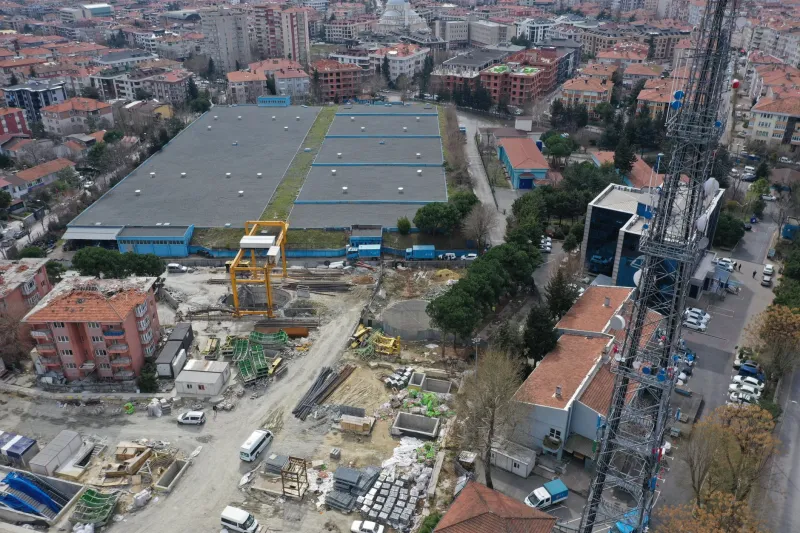
The city's ongoing infrastructure investments — including transportation upgrades and urban renewal projects in several central districts — are creating neighborhoods that are genuinely livable for international residents while still priced well below their eventual market potential.
For American buyers who approach the Şanlıurfa market with dual intent — seeking both a sound investment and a legal pathway to extended residency — the calculus is unusually favorable. The property serves two purposes simultaneously: it generates equity and, potentially, rental income, while also functioning as the legal anchor for a life that costs significantly less than its American equivalent.
Practical Steps for American Buyers
For those ready to explore this pathway seriously, the process begins with selecting a property through a reputable local agency, completing the title deed transfer (tapu) at the Turkish Land Registry Office, and then filing a short-term residence permit application through Turkey's e-ikamet online system. Most applicants working with an experienced local attorney complete the full process within four to eight weeks of property acquisition.
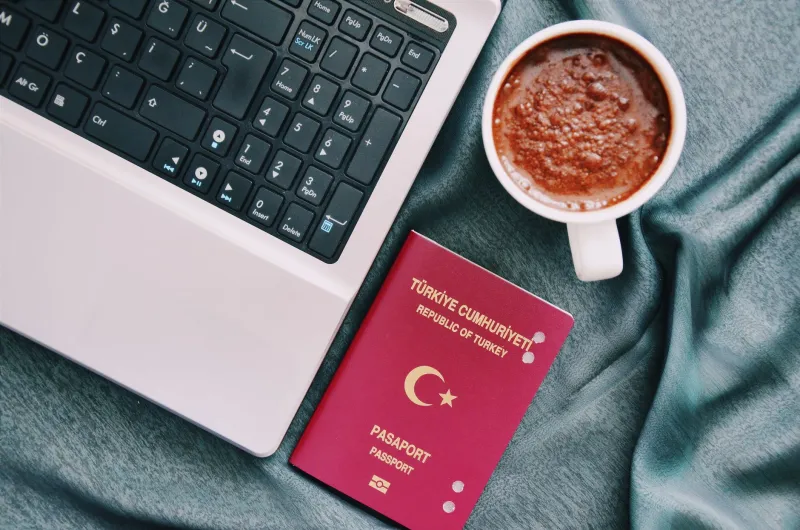
Documentation requirements include proof of property ownership, a valid passport, proof of health insurance valid in Turkey, and biometric photographs. The application fee is modest by American standards.
The most important advice from those who have completed the process successfully is consistent: engage a qualified Turkish immigration attorney before closing on the property, not after. Ensuring that the purchase is structured correctly from a legal standpoint makes the subsequent residency application considerably more straightforward.
For Americans weighing their options in an uncertain economic climate, the combination of affordable real estate, a renewable residency pathway, and a lower cost of living may represent one of the more rational strategies available. Şanlıurfa, for all its historical depth and cultural richness, is also proving to be a pragmatically sound place to begin.