Buy Before the Bulldozers: American Investors Are Timing Şanlıurfa's Infrastructure Wave for Maximum Returns
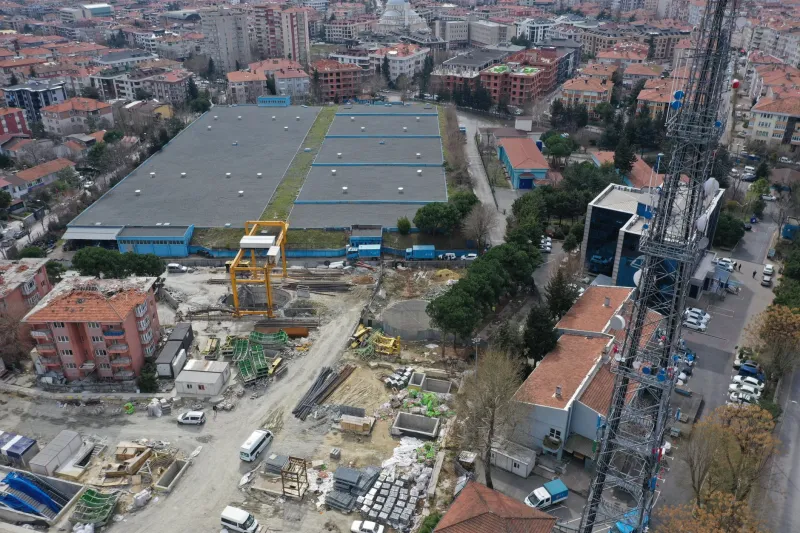
In American real estate circles, the phrase "infrastructure play" carries a specific meaning. It describes the deliberate strategy of purchasing property in an area slated for significant public investment — a new highway interchange, a transit hub, a commercial district expansion — before the ribbon-cutting ceremonies drive prices beyond reach. Savvy investors from cities like Phoenix, Nashville, and Columbus have made fortunes executing this approach domestically. Now, a growing number of them are exporting the strategy to Şanlıurfa, Turkey, where a convergence of government-led development initiatives is quietly reshaping the region's property landscape.
The timing, according to those already active in the market, is critical. Şanlıurfa is no longer a secret among globally minded investors, but it remains early enough that entry prices in key corridors still reflect yesterday's fundamentals rather than tomorrow's potential.
Why Infrastructure Spending Is Accelerating in Şanlıurfa
Turkey's central government has designated southeastern Anatolia — with Şanlıurfa as one of its anchor cities — as a priority zone for economic development. This designation translates into tangible capital allocation: upgraded highway networks connecting Şanlıurfa to Gaziantep and the Syrian border crossings, expansion of Şanlıurfa GAP Airport's cargo and passenger capacity, new organized industrial zones on the city's eastern and northern perimeters, and an ambitious urban renewal program targeting the historic core.
The GAP (Güneydoğu Anadolu Projesi, or Southeastern Anatolia Project) framework, which has guided regional investment for decades, continues to unlock agricultural and industrial development that feeds directly into demand for commercial and residential real estate. When irrigation infrastructure improves agricultural yields, rural workers migrate toward urban centers. When industrial zones attract manufacturers, those workers need housing. When housing demand rises, retail and service infrastructure follows. Each link in this chain creates a distinct window for property investment.
American investors familiar with the post-industrial redevelopment patterns of cities like Pittsburgh or Detroit will recognize the underlying logic immediately, even if the cultural context differs substantially.
The Neighborhoods Positioned for the Steepest Appreciation
Karaköprü and the Northern Corridor
Karaköprü, situated on Şanlıurfa's northern edge, is perhaps the district generating the most discussion among foreign investors right now. The area sits directly along the transportation corridor being upgraded to accommodate increased freight movement between the city's new industrial zone and the broader regional highway network. Property values here remain significantly below the city average, yet proximity to planned logistics infrastructure suggests that gap will narrow meaningfully within five to seven years. Residential plots and small commercial parcels are the primary acquisition targets for investors working this corridor.
Eyyübiye's Transitional Blocks
Eyyübiye is a district in active transformation. Portions of it — particularly blocks adjacent to announced urban renewal zones — present a classic transitional investment profile: structures that are functionally obsolete but occupy land whose future value is being repriced upward by nearby development. American investors experienced with value-add strategies in transitional urban neighborhoods will find the mechanics familiar. The key distinction here is scale: acquisition costs are a fraction of comparable domestic opportunities, and the Turkish government's urban renewal legislation provides a legal framework that can accelerate redevelopment timelines.
The Airport Influence Zone
As GAP Airport expands its operational footprint, the land sitting within a reasonable radius of the facility is beginning to attract interest from investors focused on hospitality, short-term rental, and logistics-adjacent commercial uses. Properties along the primary access roads to the airport — currently priced as ordinary residential or agricultural land — may see their classification and therefore their value shift substantially as passenger and cargo volumes increase. This is a longer-horizon play, but for investors with a 10-year outlook, the entry prices available today look compelling against projected demand.
The Mechanics of Timing an Infrastructure Purchase
The most important skill in this investment approach is distinguishing between announced projects and funded, actively progressing projects. Government development plans are published through official channels in Turkey, and a competent local legal advisor can help American buyers identify which initiatives have moved from proposal to procurement — the stage at which property appreciation typically begins to accelerate.
The general pattern, observed in markets globally and increasingly evident in Şanlıurfa, follows a rough sequence. Initial announcement creates modest awareness but limited price movement. Funding confirmation and contractor selection trigger the first wave of informed buying. Ground-breaking generates broader media coverage and the beginning of speculative interest. Active construction brings the widest public awareness — and the end of the most favorable entry window. Completion delivers the final appreciation surge, often accompanied by the arrival of buyers who wish they had acted earlier.
American investors who enter during the announcement-to-funding window tend to capture the largest share of total appreciation. Those entering at the construction phase still benefit but with compressed upside. Understanding where a given project sits in this timeline is, therefore, the foundational research task.
Currency Dynamics Amplify the Opportunity
American buyers operating with US dollars enjoy a structural advantage in this strategy that domestic Turkish investors do not. The lira's historical depreciation against the dollar means that even modest appreciation in lira-denominated property values can translate into meaningful dollar-denominated gains when combined with favorable exchange rate movement. Conversely, even in a scenario where exchange rates remain flat, the dollar's purchasing power within the Turkish market allows American investors to acquire properties that would require substantially larger capital outlays in comparable domestic markets.
This currency leverage is not a substitute for sound property selection — a poorly chosen asset in a weak location will underperform regardless of exchange rate dynamics — but it does function as a meaningful tailwind for investors who have done their homework on location and timing.
Due Diligence Considerations for Infrastructure Plays
Infrastructure-focused investment carries specific due diligence requirements that differ somewhat from conventional property purchases. American buyers should prioritize verification of zoning classifications and any pending reclassification linked to development projects. Properties adjacent to announced infrastructure corridors sometimes carry easement restrictions or compulsory purchase risk that must be assessed before acquisition.
Engaging a Turkish real estate attorney with specific experience in southeastern Anatolian markets — rather than a generalist Istanbul-based firm — is strongly advisable. Local expertise in navigating municipal planning offices and interpreting regional development documentation is not interchangeable with broader Turkish real estate knowledge.
Title deed verification (tapu kontrolü) remains non-negotiable, as does a thorough review of any outstanding liens or encumbrances. These are standard steps in any Turkish property transaction, but they carry additional weight when the investment thesis depends on a specific development trajectory.
The Window Is Open, But Not Indefinitely
Şanlıurfa's infrastructure story is becoming more widely known. International real estate publications, investment forums, and regional economic reports are increasingly featuring the city as a market to watch. Each new article, each conference panel, and each successful exit by an early investor brings additional capital and attention to a market that, not long ago, was largely unknown outside Turkey.
For American investors drawn to the infrastructure play model, the calculus is straightforward: the neighborhoods described above offer conditions that closely resemble the early stages of development cycles that have generated substantial returns in other emerging markets. Those conditions will not persist indefinitely. The bulldozers, in some corridors, are already moving.
For buyers ready to explore specific listings aligned with Şanlıurfa's infrastructure corridors, Şanlıurfa Satılık maintains an actively updated inventory of properties across the districts discussed here. The search for your position in this market begins with knowing where to look — and acting before the opportunity recalibrates itself out of reach.