Buy Low, Restore High, Sell Global: The American Investor's Blueprint for Flipping Şanlıurfa's Ottoman Heritage Homes
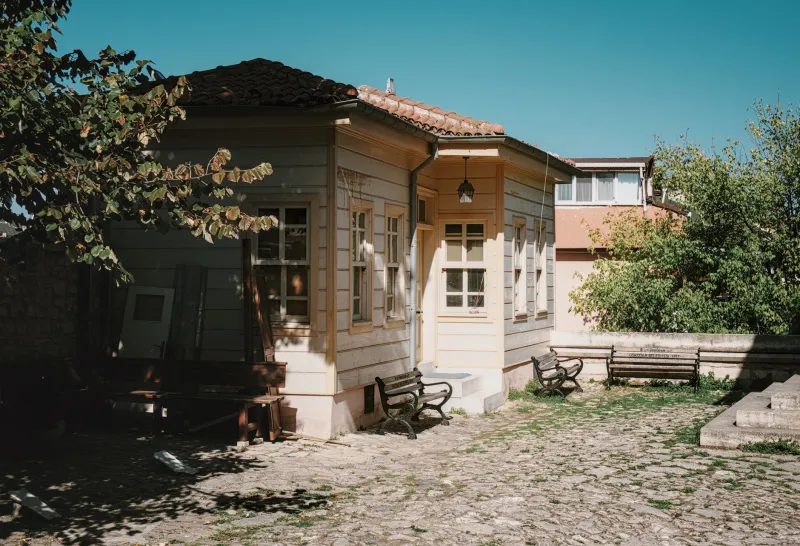
For most American real estate investors, the word "flip" conjures images of suburban ranch houses, laminate flooring, and a coat of agreeable gray paint. What it rarely conjures is a 200-year-old limestone courtyard home in southeastern Turkey, its carved stone archways intact, its underground cistern still functional, its asking price roughly equivalent to a used Toyota Camry.
That particular arithmetic is precisely what has begun drawing a small but increasingly sophisticated group of U.S. investors to Şanlıurfa — and specifically to the city's ancient residential quarters, where Ottoman-era stone houses sit in varying states of neglect, waiting for someone with capital, vision, and patience to unlock their value.
Why Şanlıurfa's Historic Housing Stock Is Uniquely Positioned
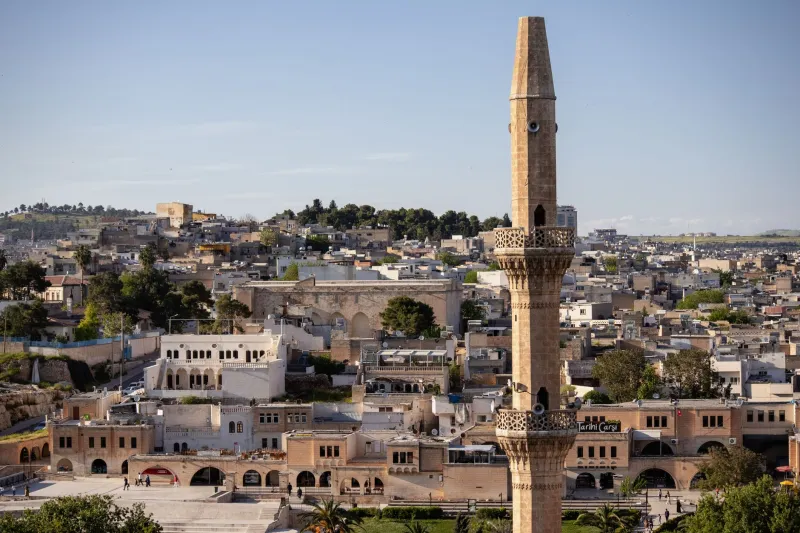
Şanlıurfa's old city — centered around the Gümrük Han district, the bazaar quarter, and the neighborhoods climbing toward the Crusader-era citadel — contains one of the most intact concentrations of traditional Anatolian domestic architecture anywhere in Turkey. These are not reconstructions or tourist-facing facades. They are genuine residential buildings, many dating to the 18th and 19th centuries, constructed from the region's distinctive honey-colored limestone and built around central courtyards shaded by pomegranate and fig trees.
The structural bones are often exceptional. Ottoman builders worked with materials and methods that have proven remarkably durable. What typically ails these properties is neglect rather than fundamental decay: crumbling plaster, outdated plumbing, absent electrical systems, and interiors that have been subdivided or modified without sensitivity to the original architecture. In short, exactly the kind of problems that skilled renovation can reverse.
Yet acquisition prices remain startlingly low by any Western standard. Distressed examples in secondary locations can be purchased for the equivalent of $15,000 to $40,000 USD. Properties in stronger locations — closer to the citadel, with unobstructed courtyard configurations, or with documented historical significance — command more, but rarely exceed $80,000 to $120,000 USD in their pre-restoration state. For American investors accustomed to paying $400,000 for a three-bedroom fixer-upper in a mid-tier U.S. market, these numbers require a moment of recalibration.
The Renovation Equation: What It Actually Costs
Acquisition is only the first chapter. The renovation of a heritage property in Şanlıurfa is a specialized undertaking, and investors who approach it casually tend to learn expensive lessons.
The most important early decision is whether to pursue a restoration that meets Turkish heritage authority standards — which opens access to certain grant programs and, more importantly, to the "certified historic property" designation that dramatically expands the buyer pool at the exit stage. This path requires working with architects registered with the relevant preservation bodies and using approved materials and techniques. It adds complexity but also adds verifiable credential to the finished asset.
For a mid-sized courtyard house of approximately 200 to 300 square meters, investors who have completed projects in the old city report total renovation budgets ranging from $60,000 to $150,000 USD, depending on the scope of work and the finish level targeted. A boutique-hotel-quality restoration — the kind that commands premium pricing from international buyers — sits toward the upper end of that range. Key cost components include:
- Structural and masonry work: Repointing limestone, repairing arched ceilings, and restoring original stone flooring typically represents the largest single expense, often $25,000 to $45,000 USD for a property of this scale.
- Mechanical systems: Installing modern plumbing, electrical, and HVAC while concealing infrastructure within heritage-appropriate finishes adds $15,000 to $30,000 USD.
- Interior finishing: Sourcing period-appropriate woodwork, traditional tile, and custom joinery — much of it still available from Şanlıurfa's active artisan community — runs $10,000 to $35,000 USD depending on the ambition of the design.
- Courtyard and landscape: A well-executed courtyard restoration, including fountain, plantings, and stone paving, typically costs $5,000 to $15,000 USD and is disproportionately important to buyer perception.
All-in acquisition and renovation costs for a well-executed project in a strong location therefore tend to fall in the $100,000 to $200,000 USD range.
Who Is Buying at the Exit
This is where the strategy becomes genuinely interesting. The buyer at the exit stage is rarely a local Şanlıurfa resident. The market for fully restored Ottoman heritage homes has become increasingly international, driven by several converging forces.
European buyers — particularly from Germany, the Netherlands, and the Gulf states — have shown strong appetite for authentic Turkish heritage properties as both lifestyle assets and alternative investments. The global boutique hotel market has created institutional demand for small, character-rich properties that cannot be replicated by new construction. Turkish diaspora investors, many of them based in Europe, actively seek heritage properties in their ancestral regions. And a growing segment of high-net-worth buyers across multiple nationalities are acquiring such properties as private retreats, drawn by the combination of cultural authenticity, relative affordability compared to comparable assets in Morocco or Portugal, and the increasingly well-documented historical significance of Şanlıurfa itself.
Restored properties in prime locations have sold to international buyers in the $250,000 to $450,000 USD range — and in a small number of documented cases involving exceptional properties converted to operational boutique hotels, significantly higher. Against all-in costs of $100,000 to $200,000 USD, the implied returns are substantial, though they require realistic timelines of 18 to 36 months from acquisition to sale completion.
The Operational Path: Boutique Hotel vs. Direct Sale
Investors face a meaningful strategic choice at the outset: restore and sell immediately upon completion, or operate the property as a boutique hotel or upscale short-term rental for one to three years before selling.
The direct-sale path is simpler and faster. It captures the renovation premium without the complexity of hospitality operations and avoids the regulatory requirements associated with running a licensed accommodation business in Turkey.
The operational path is more demanding but potentially more rewarding on two fronts. First, a property with a documented operating history — occupancy rates, revenue records, established online reviews — commands a materially higher price from buyers who are acquiring it as an income-generating asset rather than purely as a lifestyle purchase. Second, the operating income during the holding period partially offsets carrying costs, improving the effective return on invested capital.
American investors with hospitality backgrounds or access to experienced local management partners tend to favor the operational path. Those without such resources, or those prioritizing capital velocity, typically opt for the direct sale.
Practical Considerations Before Committing Capital
No investment strategy is without friction, and the Ottoman heritage flip is no exception. Title verification for older properties in Şanlıurfa's historic quarters requires careful legal due diligence — some properties carry inheritance complications or partial ownership disputes that must be resolved before purchase. Working with a locally experienced real estate attorney is not optional; it is the foundation of any responsible acquisition process.
Heritage authority approvals add time to the renovation timeline and require early engagement. Investors who attempt to begin physical work before securing necessary permits have encountered costly interruptions. The preservation bureaucracy is navigable, but it rewards patience and advance planning.
Finally, the exit market, while real and growing, is not deep in the way that urban residential markets in Istanbul or Ankara are deep. Selling a restored heritage property in Şanlıurfa to an international buyer is a targeted marketing exercise, not a passive listing process. Investors who build relationships with international real estate brokers specializing in heritage and boutique hotel properties — and who invest in professional photography, virtual tours, and multilingual marketing materials — consistently achieve better outcomes than those who rely on domestic listing platforms alone.
A Market Window Worth Taking Seriously
The combination of low acquisition costs, a skilled and affordable local restoration workforce, growing international buyer interest, and the city's rising profile as a heritage tourism destination creates conditions that are, at present, genuinely favorable. Those conditions will not persist indefinitely. Infrastructure investment, UNESCO-adjacent attention to Göbekli Tepe, and the general pattern of heritage district gentrification all point toward a market that becomes progressively more competitive and more expensive over the next five to ten years.
For American investors willing to engage seriously with the due diligence, the local relationships, and the patient timelines that heritage property investment demands, Şanlıurfa's old quarters represent one of the more compelling opportunities available in the current global real estate landscape — one where history, craft, and intelligent capital can converge to produce outcomes that a suburban flip simply cannot match.