Why Shrewd American Buyers Are Passing on Istanbul and Heading Straight to Şanlıurfa
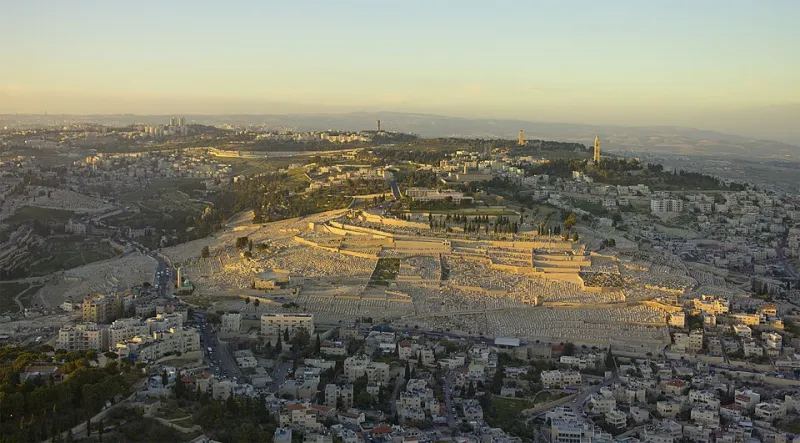
Photo: Godot13, CC BY-SA 4.0, via Wikimedia Commons
The Postcard Problem With Turkey's Famous Markets
For most Americans, Turkey begins and ends with Istanbul. The city is undeniably magnificent — a skyline of minarets and suspension bridges, a culinary scene that rivals any European capital, and a real estate market that has attracted international buyers for decades. Cappadocia, with its fairy-chimney landscapes and boutique cave hotels, has become a social media fixture that draws visitors from across the globe.
But here is the part the travel influencers don't mention: magnificence is expensive. And in real estate, the price you pay at entry determines almost everything about the return you eventually collect.
A growing number of American buyers — some seasoned investors, others first-time overseas purchasers — are doing the math and arriving at the same conclusion. The famous markets are crowded, the entry prices are steep, and the days of easy appreciation have largely passed. Meanwhile, a city in southeastern Anatolia is quietly offering what Istanbul offered twenty years ago: genuine value, authentic culture, and the kind of growth trajectory that rewards early conviction.
That city is Şanlıurfa.
The Numbers Tell the Story
Let's start with price per square meter, because nothing focuses an investor's mind quite like a direct comparison.
In central Istanbul neighborhoods popular with foreign buyers — Beyoğlu, Beşiktaş, Kadıköy — residential property now routinely trades at 40,000 to 80,000 Turkish lira per square meter, with premium addresses pushing well beyond that. Even accounting for Turkey's recent currency volatility, those figures translate to meaningful dollar commitments for American buyers, and the rental yields in saturated tourist-facing neighborhoods have compressed accordingly as supply has expanded.
In Cappadocia, the boutique cave property market is almost entirely driven by short-term rental speculation and lifestyle buyers. Entry costs for anything with genuine character and permits start high and climb quickly. The market is thin, liquidity is limited, and regulatory pressure on short-term rentals has been increasing across Turkey.
Şanlıurfa tells a different story. Residential properties in established central neighborhoods such as Eyyübiye and Haliliye are available at a fraction of Istanbul prices. Newly developed apartment complexes in growth corridors like Karaköprü offer modern amenities at price points that would be unrecognizable to anyone who has shopped in Istanbul. Gross rental yields in the 8 to 12 percent range — figures that experienced investors in US gateway cities haven't seen in a generation — are achievable with proper property selection and management.
Profiles in Conviction: Americans Who Chose Differently
Mark, a retired civil engineer from Phoenix, Arizona, visited Istanbul twice as a tourist before beginning his property search in Turkey. "I loved Istanbul, but I couldn't make the numbers work," he said. "A friend who follows Turkish archaeology told me about Göbekli Tepe and suggested I visit Şanlıurfa. I came for a week and bought an apartment before I left."
Mark now owns two properties in Şanlıurfa — one rented long-term to a Turkish professional family, the other used as a base during his extended annual visits. His combined rental income, converted to dollars at current exchange rates, covers his Turkish carrying costs with money to spare. "I feel like I caught something early," he said. "The city is changing fast, and I got in before most people were paying attention."
Diana, a marketing consultant from Austin who works remotely, took a different path. She had originally planned to purchase in Bodrum, Turkey's Aegean resort town beloved by European buyers. A chance conversation with a Turkish colleague redirected her research. "Bodrum is gorgeous but it felt like buying in the Hamptons — the premium was entirely about prestige, not fundamentals," she explained. "Şanlıurfa felt like a city with actual economic momentum. The university, the archaeological tourism, the infrastructure investment — it all pointed to real demand, not just lifestyle speculation."
Diana purchased a renovated historic home in the old city and now rents it as a cultural guesthouse during peak tourism months while using it herself during the quieter seasons. "My yield in the first year exceeded what I was projecting from Bodrum by a significant margin," she said.
What Istanbul Can't Offer Anymore
The comparison between Şanlıurfa and Istanbul is not simply about price. It is about where each market sits in its own cycle.
Istanbul has been an internationally recognized investment destination for long enough that the information advantage — the edge that comes from knowing something the broader market doesn't — has largely evaporated. Institutional money, foreign developer capital, and decades of media coverage have collectively priced in most of the obvious upside. What remains is a mature market with mature-market returns and mature-market risks, including significant regulatory complexity for foreign buyers in certain districts.
Şanlıurfa, by contrast, is at an earlier inflection point. The completion of major infrastructure projects — including road and rail connectivity improvements linking the city to broader regional networks — has reduced the geographic isolation that historically kept outside capital away. The ongoing international attention on Göbekli Tepe and the broader Taş Tepeler archaeological project has introduced Şanlıurfa to a global audience that barely knew the city existed a decade ago. And the Turkish government's designation of Şanlıurfa as a priority development zone has channeled investment into the city's physical fabric in ways that are visibly reshaping entire neighborhoods.
None of this has yet been fully reflected in property prices. That gap — between current valuations and the trajectory implied by these fundamentals — is precisely what experienced investors recognize as opportunity.
Quality of Life: The Factor the Spreadsheet Misses
Investors who have actually spent time in Şanlıurfa consistently mention something that doesn't appear in yield calculations: the city is genuinely livable in ways that surprise visitors expecting a provincial backwater.
The old city's bazaars and caravanserais offer an authenticity that Istanbul's tourist-facing neighborhoods lost long ago. The local cuisine — anchored by the legendary Urfa kebab and a constellation of regional specialties — is celebrated across Turkey as among the country's finest. The pace of daily life is deliberate and communal in a way that many Americans, particularly those fatigued by the relentless velocity of US urban life, find restorative rather than merely quaint.
Harran University brings a younger demographic and intellectual energy to the city. The sacred sites of the old city — including the Balıklıgöl complex, one of the most serene public spaces in the entire country — give Şanlıurfa a cultural gravity that purely commercial cities cannot manufacture.
The Window Is Open — But Not Forever
Every emerging market has a window. It opens when the fundamentals improve but before the mainstream catches on, and it closes when enough capital arrives to normalize the premium away. Istanbul's window opened in the early 2000s and closed sometime around 2015. Cappadocia's boutique property window opened and closed within a decade.
Şanlıurfa's window is open right now. The infrastructure is improving. The international profile is rising. The price-to-potential ratio remains favorable in ways that experienced investors recognize immediately. American buyers who are willing to look past the obvious choices and do the work of understanding this city on its own terms are finding opportunities that Turkey's more famous addresses simply cannot match anymore.
At Şanlıurfa Satılık, we have watched this shift unfold in real time. The buyers who arrived early are already seeing it reflected in their portfolios. The question for anyone still on the sidelines is a simple one: how long do you want to wait?